Technology
L’entreprise analyse des photographies de scènes de crime issues d’Europe - II
Analyser les médias et les réseaux

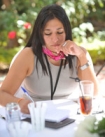
Insight into the Crime Photographic Images (Source: ©Alex-Morgan)

Insight into the Crime Photographic Images
(Source: ©Alex-Morgan)
(Source: ©Alex-Morgan)
Dans les médias, l’image oriente l’attention du public vers la question visée. La photographie constitue donc un levier central pour capter, diriger et maintenir l’intérêt. Elle peut émouvoir, informer et inspirer chaque individu. Nous recommandons d’intégrer des images pertinentes pour renforcer la clarté du message et l’impact éditorial.
Les médias et la société sont interdépendants. Sans médias, la société perd l’accès rapide aux informations récentes. Sans société, les médias perdent leur raison d’être et disparaissent. Le public fait des supports d’information ses principales sources d’actualités [1–7].
II. MÉTHODOLOGIE
Nous adoptons une approche quantitative afin d’obtenir des données maximales et comparables. La méthode quantitative traite des éléments mesurables. La méthode qualitative porte sur des qualités non quantifiables. Pour mesurer l’effet des images de crimes sur les citoyens, nous administrons un questionnaire et classons les réponses par accord et désaccord. Nous quantifions également la perception du public vis?à?vis de ces images [6] [8–15].
III. LES IMAGES DE CRIMES DANS LES MÉDIAS ET SUR LES RÉSEAUX SOCIAUX: IMPACT SUR LE PUBLIC
Les images publiées accompagnent et structurent le contenu des nouvelles. Sur une page d’accueil, l’image capte d’abord l’attention. Elle informe et déclenche une réponse émotionnelle. La photographie, forme de communication non verbale, accélère la transmission du message. Le texte seul perd en efficacité; l’illustration l’amplifie. En journalisme, l’image est indispensable. Elle rend l’événement tangible. Elle suscite joie, tristesse, larmes, frustration, déception ou irritation. Les études récentes montrent que ces émotions attirent immédiatement l’attention et génèrent des sentiments associés au sujet [16–20].
Nous adoptons une approche quantitative afin d’obtenir des données maximales et comparables. La méthode quantitative traite des éléments mesurables. La méthode qualitative porte sur des qualités non quantifiables. Pour mesurer l’effet des images de crimes sur les citoyens, nous administrons un questionnaire et classons les réponses par accord et désaccord. Nous quantifions également la perception du public vis?à?vis de ces images [6] [8–15].
III. LES IMAGES DE CRIMES DANS LES MÉDIAS ET SUR LES RÉSEAUX SOCIAUX: IMPACT SUR LE PUBLIC
Les images publiées accompagnent et structurent le contenu des nouvelles. Sur une page d’accueil, l’image capte d’abord l’attention. Elle informe et déclenche une réponse émotionnelle. La photographie, forme de communication non verbale, accélère la transmission du message. Le texte seul perd en efficacité; l’illustration l’amplifie. En journalisme, l’image est indispensable. Elle rend l’événement tangible. Elle suscite joie, tristesse, larmes, frustration, déception ou irritation. Les études récentes montrent que ces émotions attirent immédiatement l’attention et génèrent des sentiments associés au sujet [16–20].
Références
[1] L. Zhijun and W. Ning, “A Cyber Crime Investigation Model Based on Case Characteristics,” 2017 4th International Conference on Information Science and Control Engineering (ICISCE), 2017, pp. 11–15, doi: 10.1109/ICISCE.2017.12.
[2] F. Ahmed, F. Khelifi, A. Lawgaly and A. Bouridane, “The ‘Northumbria Temporal Image Forensics’ Database: Description and Analysis,” 2020 7th International Conference on Control, Decision and Information Technologies (CoDIT), 2020, pp. 982–987, doi: 10.1109/CoDIT49905.2020.9263888.
[3] N. Nayak, P. N. Hegde, Anusha, P. Nayak, P. S. Venugopala and T. Kumaki, “Morphological Pattern Spectrum Based Image Manipulation Detection,” 2017 IEEE 7th International Advance Computing Conference (IACC), 2017, pp. 596–599, doi: 10.1109/IACC.2017.0127..
[4] K. Kageyama, T. Kumaki and T. Koide, “Structuring Element-counting Approach for Morphological Pattern Spectrum-based Image Manipulation Detection,” 2019 2nd International Symposium on Devices, Circuits and Systems (ISDCS), 2019, pp. 1–4, doi: 10.1109/ISDCS.2019.8719260.
[5] Q. Gu, W. Cai, S. Yu and Z. Chen, “An Exploratory Study on Judicial Image Quality Assessment Based on Deep Learning,” 2019 IEEE 19th International Conference on Software Quality, Reliability and Security (QRS), 2019, pp. 300–305, doi: 10.1109/QRS.2019.00046.
[6] D. J. Salim and B. -S. Lin, “Everyone is A Forensic Artist: Sketch-to-Photo Transformation for Human Face,” 2021 IEEE 4th International Conference on Knowledge Innovation and Invention (ICKII), 2021, pp. 118–122, doi: 10.1109/ICKII51822.2021.9574719.
[7] R. Kokila, M. S. Sannidhan and A. Bhandary, “A study and analysis of various techniques to match sketches to Mugshot photos,” 2017 International Conference on Inventive Communication and Computational Technologies (ICICCT), 2017, pp. 41–44, doi: 10.1109/ICICCT.2017.7975243.
[8] M. K. J. Kannan, “A bird’s eye view of Cyber Crimes and Free and Open Source Software’s to Detoxify Cyber Crime Attacks - an End User Perspective,” 2017 2nd International Conference on Anti-Cyber Crimes (ICACC), 2017, pp. 232–237, doi: 10.1109/Anti-Cybercrime.2017.7905297.
[6] D. J. Salim and B. -S. Lin, “Everyone is A Forensic Artist: Sketch-to-Photo Transformation for Human Face,” 2021 IEEE 4th International Conference on Knowledge Innovation and Invention (ICKII), 2021, pp. 118–122, doi: 10.1109/ICKII51822.2021.9574719.
[7] R. Kokila, M. S. Sannidhan and A. Bhandary, “A study and analysis of various techniques to match sketches to Mugshot photos,” 2017 International Conference on Inventive Communication and Computational Technologies (ICICCT), 2017, pp. 41–44, doi: 10.1109/ICICCT.2017.7975243.
[8] M. K. J. Kannan, “A bird’s eye view of Cyber Crimes and Free and Open Source Software’s to Detoxify Cyber Crime Attacks - an End User Perspective,” 2017 2nd International Conference on Anti-Cyber Crimes (ICACC), 2017, pp. 232–237, doi: 10.1109/Anti-Cybercrime.2017.7905297.
[9] Y. Cai, D. Li and Y. Wang, “Network Crime Information Retrieval Framework based on Facial Image Recognition,” 2020 3rd International Conference on Intelligent Sustainable Systems (ICISS), 2020, pp. 965–969, doi: 10.1109/ICISS49785.2020.9316037.
[10] K. Ravichandran and S. Arulchelvan, “Structural Equation Model Analyzed on Cyber Crime and Media Awareness in India,” 2017 Second International Conference on Recent Trends and Challenges in Computational Models (ICRTCCM), 2017, pp. 141–146, doi: 10.1109/ICRTCCM.2017.79.
[11] G. Garcia-Zanabria et al., “Mirante: A visualization tool for analyzing urban crimes,” 2020 33rd SIBGRAPI Conference on Graphics, Patterns and Images (SIBGRAPI), 2020, pp. 148–155, doi: 10.1109/SIBGRAPI51738.2020.00028.
[10] K. Ravichandran and S. Arulchelvan, “Structural Equation Model Analyzed on Cyber Crime and Media Awareness in India,” 2017 Second International Conference on Recent Trends and Challenges in Computational Models (ICRTCCM), 2017, pp. 141–146, doi: 10.1109/ICRTCCM.2017.79.
[11] G. Garcia-Zanabria et al., “Mirante: A visualization tool for analyzing urban crimes,” 2020 33rd SIBGRAPI Conference on Graphics, Patterns and Images (SIBGRAPI), 2020, pp. 148–155, doi: 10.1109/SIBGRAPI51738.2020.00028.
[12] K. Biron, W. Mansoor, S. Miniaoui, S. Atalla, H. Mukhtar and K. F. Bin Hashim, “Data Science Tools for Crime Investigation, Archival, and Analysis,” 2019 IEEE SmartWorld, Ubiquitous Intelligence & Computing, Advanced & Trusted Computing, Scalable Computing & Communications, Cloud & Big Data Computing, Internet of People and Smart City Innovation (SmartWorld/SCALCOM/UIC/ATC/CBDCom/IOP/SCI), 2019, pp. 1263–1266, doi: 10.1109/SmartWorld-UIC-ATC-SCALCOM-IOP-SCI.2019.00235.
[13] V. Mahor, R. Rawat, S. Telang, B. Garg, D. Mukhopadhyay and P. Palimkar, “Machine Learning based Detection of Cyber Crime Hub Analysis using Twitter Data,” 2021 IEEE 4th International Conference on Computing, Power and Communication Technologies (GUCON), 2021, pp. 1–5, doi: 10.1109/GUCON50781.2021.9573736.
[14] S. N. Huda Sheikh Abdullah et al., “Assessment of Self-Identity Among Teens Towards Self-Crime Prevention Program,” 2018 Cyber Resilience Conference (CRC), 2018, pp. 1–4, doi: 10.1109/CR.2018.8626870.
[13] V. Mahor, R. Rawat, S. Telang, B. Garg, D. Mukhopadhyay and P. Palimkar, “Machine Learning based Detection of Cyber Crime Hub Analysis using Twitter Data,” 2021 IEEE 4th International Conference on Computing, Power and Communication Technologies (GUCON), 2021, pp. 1–5, doi: 10.1109/GUCON50781.2021.9573736.
[14] S. N. Huda Sheikh Abdullah et al., “Assessment of Self-Identity Among Teens Towards Self-Crime Prevention Program,” 2018 Cyber Resilience Conference (CRC), 2018, pp. 1–4, doi: 10.1109/CR.2018.8626870.
[15] P. B. Shailaja Rani and A. Kumar, “Digital Image Forgery Detection Techniques: A Comprehensive Review,” 2019 3rd International conference on Electronics, Communication and Aerospace Technology (ICECA), 2019, pp. 959–963, doi: 10.1109/ICECA.2019.8822064.
[16] G. U. Reddy, M. Madhu Bala and B. Padmaja, “An Overview on Digital Forensics Tools used in Crime Investigation for Forgery Detection,” 2020 International Conference on Computer Science, Engineering and Applications (ICCSEA), 2020, pp. 1–5, doi: 10.1109/ICCSEA49143.2020.9132965.
[16] G. U. Reddy, M. Madhu Bala and B. Padmaja, “An Overview on Digital Forensics Tools used in Crime Investigation for Forgery Detection,” 2020 International Conference on Computer Science, Engineering and Applications (ICCSEA), 2020, pp. 1–5, doi: 10.1109/ICCSEA49143.2020.9132965.
Photographie Criminelle Images Du Crime Aperçu Sur Le Crime Photographie Europe Photographie Amérique Du Nord
Liability for this article lies with the author, who also holds the copyright. Editorial content from USPA may be quoted on other websites as long as the quote comprises no more than 5% of the entire text, is marked as such and the source is named (via hyperlink).